

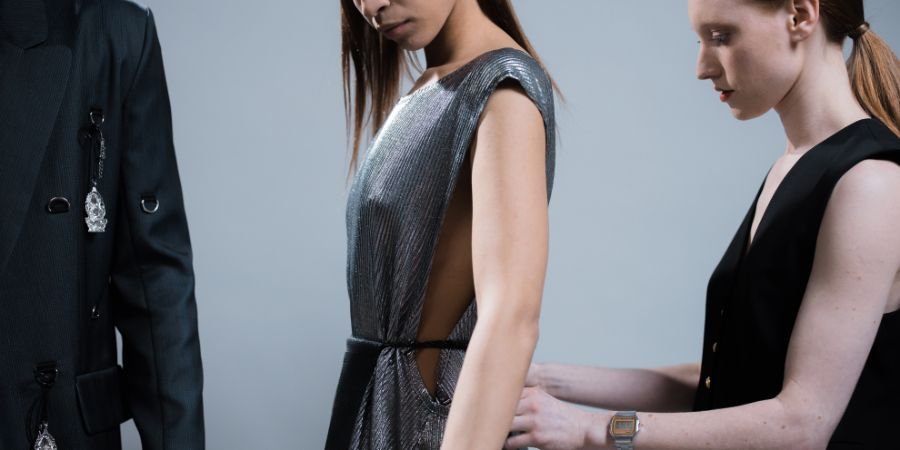

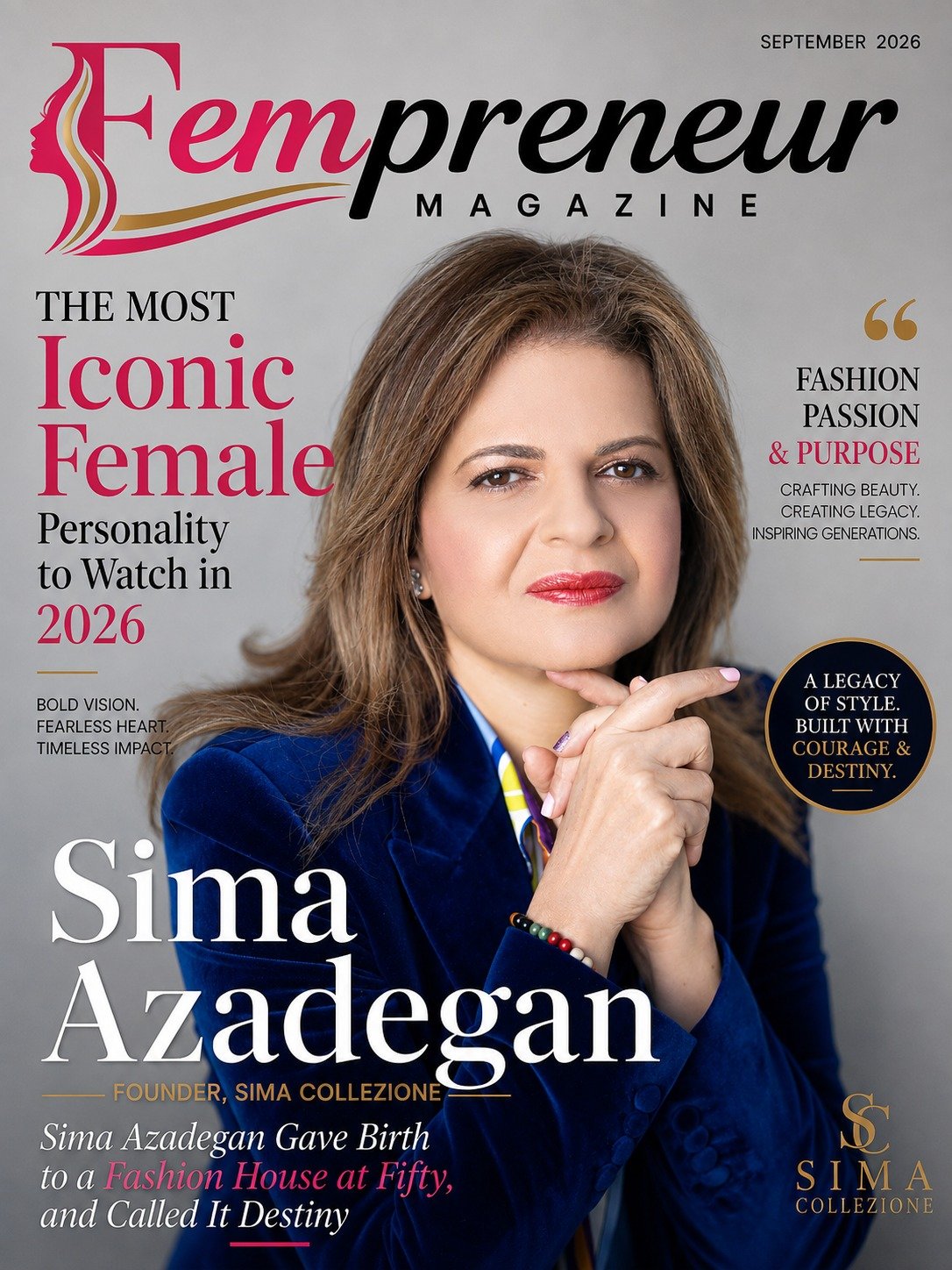

Fashion is a powerful social force because what people wear can communicate identity, preserve cultural heritage, create employment, influence health, and shape environmental behavior across communities. The connection between fashion and social impact extends far beyond clothing itself: it reaches factories, artisan communities, households, supply chains, cultural traditions, and the everyday choices of billions of consumers.
A garment can therefore carry several stories at once. It may represent personal confidence, a religious or cultural tradition, an artisan’s livelihood, a factory worker’s income, or a consumer’s commitment to sustainability. Fashion’s influence becomes especially significant because its global supply chain connects people who may never meet but whose economic and social lives are directly connected.
The United Nations Environment Programme (UNEP) describes the fashion and textile sector as economically and culturally important while also identifying significant risks to workers and the environment.
How does fashion shape personal identity?
Fashion shapes personal identity by giving individuals a visible language for expressing values, culture, gender, profession, creativity, belonging, and individuality. Clothing allows people to communicate aspects of themselves without speaking, while shared styles can create connections between people who identify with the same community, generation, movement, or cultural tradition.
This identity-building role appears at several levels:
- Individual identity: Clothing can reflect personality, confidence, lifestyle, and personal taste.
- Cultural identity: Traditional garments can connect people with history, geography, family, and heritage.
- Professional identity: Uniforms, tailoring, and workplace fashion can communicate authority and expertise.
- Social identity: Fashion can signal membership in communities, movements, subcultures, or social groups.
- Generational identity: Styles frequently become visual markers of particular generations and cultural moments.
UNESCO’s documentation of traditional textiles demonstrates how clothing can function as living cultural heritage. For example, UNESCO describes India’s saree weaving traditions as an enduring form of traditional clothing and cultural heritage, while its documentation of Jamdani describes the textile as a symbol of identity, dignity, self-recognition, and social cohesion.
That makes fashion more than an aesthetic decision. A garment can preserve knowledge that has been passed from parent to child, sustain local craftsmanship, and maintain a connection between contemporary life and historical traditions.
Why is cultural fashion important to global communities?
Cultural fashion matters because traditional clothing and textile practices preserve knowledge, strengthen belonging, and create economic opportunities for communities while allowing heritage to remain relevant in modern life. UNESCO records numerous textile and clothing traditions in which skills are transmitted through families, workshops, schools, and community practices, demonstrating that fashion can act as a vehicle for cultural continuity.
This influence becomes particularly visible when traditional designs move beyond their original communities.
A textile technique may become part of international fashion while still retaining its connection to its place of origin. The opportunity is significant, but so is the responsibility. Designers and brands working with cultural traditions need to consider attribution, fair compensation, community participation, and the difference between respectful collaboration and cultural appropriation.
The strongest approach treats cultural heritage as knowledge created by people rather than simply as an aesthetic resource.
How does fashion affect workers and economic opportunity?
Fashion affects workers by creating employment across farming, spinning, dyeing, weaving, manufacturing, logistics, retail, tailoring, design, marketing, and repair, making the industry a major source of income for communities around the world. The International Labour Organization reported in 2025 that textiles and clothing provide jobs to more than 90 million people, predominantly women.
The employment opportunity is especially important for women.
According to the ILO, the global garment industry provides jobs for around 94 million workers, with women accounting for nearly 60% of garment workers globally and around 80% in some regions. Asia accounts for approximately 75% of garment-sector workers, including an estimated 42 million women.
This creates an important contradiction at the heart of modern fashion:
| Economic opportunity | Social challenge |
| Employment for millions | Low wages in many supply chains |
| Income for women | Gender pay gaps |
| Skills development | Limited advancement opportunities |
| Global market access | Pressure for low-cost production |
| Factory employment | Workplace safety concerns |
| Artisan livelihoods | Risk of cultural exploitation |
The social value of fashion therefore depends heavily on how its products are made, not simply how they look when they reach consumers.
The ILO has found persistent decent-work deficits in Asian garment production, including informality, vulnerability, and poor working conditions, while women constitute a large share of the industry’s workforce.
What does fashion reveal about gender equality?
Fashion reveals gender inequality because women dominate many garment-production roles but remain disproportionately concentrated in lower-paid positions and face barriers to advancement. The ILO reports that women represent a large majority of garment workers while experiencing discrimination, violence and harassment, unequal pay, and restricted access to career progression.
The numbers demonstrate how significant the issue is.
In Bangladesh, the ILO reports that approximately four out of five production-line workers are women, while only about one in twenty supervisors are women. Across garment and footwear sectors in several Asian countries, the ILO found an average gender pay gap of approximately 18.5%.
That means a discussion about fashion’s social value cannot stop at women’s visibility in advertising campaigns or fashion leadership.
It must also examine the women sewing, cutting, finishing, packaging, transporting, and selling the clothes.
A genuinely progressive fashion economy would connect representation at the front of the industry with opportunity throughout the supply chain.
Why is fashion also a health issue?
Fashion becomes a health issue when textile production exposes workers to physical, chemical, ergonomic, and environmental hazards and when poor workplace conditions affect long-term well-being. Textile manufacturing can involve exposure to cotton and other dusts, synthetic fibres, dyes, solvents, mineral oils, and other chemicals, making occupational health an important part of fashion’s social footprint.
Health considerations appear throughout the fashion lifecycle:
- Agricultural stage: Workers can face exposure to pesticides and demanding physical conditions.
- Spinning and manufacturing: Dust and fibres can affect respiratory health.
- Dyeing and finishing: Chemical exposure can create occupational risks.
- Factory work: Repetitive movements and long working hours can create ergonomic problems.
- Workplace conditions: Poor ventilation, excessive heat, inadequate safety systems, and harassment can affect physical and mental well-being.
- Waste management: Textile waste can create pollution and health risks when poorly managed.
The 2013 Rana Plaza collapse remains one of the clearest reminders of the human consequences of unsafe fashion production. The ILO records that 1,134 women and men died in the disaster, which became a major catalyst for improving workplace safety and labor standards in the garment sector.
Health is therefore not a secondary sustainability issue. A garment cannot reasonably be considered socially responsible if the people producing it face unacceptable risks.
How does fast fashion change communities and the environment?
Fast fashion changes communities by accelerating production and consumption while transferring environmental and social pressures throughout global supply chains. UNEP estimates that the textile industry produces between 2% and 8% of global greenhouse-gas emissions and uses water equivalent to 86 million Olympic-sized swimming pools annually.
The scale becomes clearer when viewed through waste.
UNEP reports that approximately 92 million tonnes of textile waste are produced globally every year. Textile production doubled between 2000 and 2015, while the duration of garment use decreased by 36%.
The consequences are not distributed equally.
Communities with fewer waste-management resources can receive discarded clothing from wealthier consumer markets, creating additional pressures around dumping, burning, sorting, and resale. UNEP notes that discarded clothing can end up in low-income countries where inadequate waste-management infrastructure can produce serious environmental and social consequences.
This is where fashion and social impact becomes inseparable from environmental responsibility.
Climate change, water consumption, chemical pollution, textile waste, labor rights, and consumer behavior are interconnected rather than isolated problems.
Can circular fashion create greater social impact?
Circular fashion can create stronger social outcomes by extending garment life, reducing waste, supporting repair and reuse, improving resource efficiency, and encouraging business models that depend less on continuous overproduction. UNEP’s global roadmap identifies three interconnected priorities: shifting consumption patterns, improving practices, and investing in infrastructure.
A circular fashion economy can include:
- Designing for durability so clothing remains useful longer.
- Repair services that create local employment and preserve practical skills.
- Resale markets that extend product lifecycles.
- Upcycling that turns unwanted materials into higher-value products.
- Textile recycling that reduces demand for virgin resources.
- Better traceability that helps identify how and where products are made.
- Responsible production that reduces overproduction and unnecessary waste.
These models shift the definition of value.
Instead of measuring success primarily by how many new garments are sold, brands can increasingly consider product longevity, worker welfare, material efficiency, repairability, reuse, and community benefits.
UNEP’s current textile initiative specifically promotes circular business models, reduced overproduction and overconsumption, elimination of hazardous chemicals, and more transparent value chains.
What can fashion brands do to increase their social impact?
Fashion brands can increase social impact by treating labor rights, environmental responsibility, cultural integrity, and consumer education as core business responsibilities rather than marketing additions. The strongest strategies connect measurable improvements in supply chains with transparent communication about what has changed, where progress remains incomplete, and how workers and communities benefit.
Practical actions include:
- Paying suppliers responsibly: Unrealistic purchasing prices can make decent wages and working conditions harder to achieve.
- Improving traceability: Brands should understand where materials and products originate.
- Supporting women workers: Training, equal pay, childcare support, leadership opportunities, and protection from harassment can strengthen gender equality.
- Designing for longevity: Durable products reduce pressure on resources and waste systems.
- Supporting artisans: Direct partnerships and fair compensation can help preserve traditional skills.
- Reducing hazardous chemicals: Cleaner production protects workers and ecosystems.
- Publishing measurable targets: Transparency makes sustainability claims more credible.
- Educating consumers: Marketing can encourage repair, reuse, thoughtful purchasing, and longer garment use.
The ILO emphasizes that purchasing practices matter because low prices and commercial pressures can make it difficult for suppliers to raise wages and maintain decent working conditions.
This is an important distinction between fashion marketing and meaningful social responsibility.
A campaign can communicate sustainability, but supply-chain decisions determine whether that sustainability actually exists.
How can consumers contribute to fashion and social impact?
Consumers contribute to fashion and social impact through purchasing, wearing, repairing, reselling, donating, and discussing clothing, because individual behavior collectively influences demand and therefore affects production systems. Consumers do not control every part of the fashion industry, but their choices can reinforce business models built around durability, transparency, circularity, and responsible production.
A practical consumer framework is straightforward:
| Consumer decision | Potential social/environmental benefit |
| Buy fewer, better-quality pieces | Reduces unnecessary production |
| Wear clothing longer | Extends product life |
| Repair damaged garments | Supports circularity |
| Buy second-hand | Reduces demand for new production |
| Research brand policies | Rewards transparency |
| Support local artisans | Strengthens community economies |
| Avoid unnecessary trend cycles | Reduces overconsumption |
| Recycle textiles appropriately | Keeps materials in circulation |
UNEP emphasizes that consumption is central to fashion’s climate impact and that brands, designers, media, and other industry participants influence the identities, values, and actions of billions of people.
The consumer’s role is therefore not simply about buying “sustainable” products. It is about changing the relationship with clothing itself.
The future of fashion is increasingly defined by responsibility
The future of fashion will be shaped by whether the industry can combine creativity and commercial growth with decent work, cultural respect, healthier production, and circular resource use. Fashion’s influence gives it unusual power: the same industry that can normalize excessive consumption can also make repair, reuse, cultural preservation, ethical employment, and responsible design desirable and mainstream.
The most meaningful form of fashion and social impact is not a single collection or campaign. It is a systemic shift in how clothing is designed, produced, marketed, purchased, used, and discarded.
That shift is already visible in several directions:
- Circular business models are gaining attention.
- Consumers are questioning disposable fashion.
- Supply-chain transparency is becoming more important.
- Traditional crafts are receiving renewed global interest.
- Women’s economic participation remains central to garment-sector reform.
- Governments and international organizations are focusing more heavily on textile waste and environmental regulation.
- Technology is creating new possibilities for traceability, material innovation, resale, and production efficiency.
The opportunity is substantial because fashion already has global cultural reach. Its challenge is ensuring that influence produces benefits beyond the runway and retail floor.
FAQ
What is fashion and social impact?
Fashion and social impact describes the ways the fashion industry affects people, communities, culture, labor, health, equality, and the environment. It includes both positive outcomes, such as employment and cultural preservation, and negative consequences, such as unsafe working conditions, pollution, waste, and exploitation.
Why does fashion matter to cultural identity?
Fashion matters to cultural identity because traditional clothing and textile practices can preserve history, craftsmanship, community knowledge, and shared values. UNESCO documents textile traditions where skills are passed between generations and garments serve as symbols of identity and social cohesion.
How does fashion affect women globally?
Fashion affects women significantly because women represent a large proportion of garment workers worldwide. The ILO estimates that nearly 60% of global garment workers are women, while identifying persistent problems involving pay inequality, discrimination, harassment, and limited advancement opportunities.
How can fashion become more socially responsible?
Fashion can become more socially responsible through fair purchasing practices, decent wages, safer workplaces, gender equality, cultural respect, durable design, circular production, better supply-chain transparency, reduced waste, and consumer education. Responsibility must extend across the entire lifecycle of a garment rather than focus only on its final marketing message.
Conclusion
Fashion has evolved from a way to dress into a global system that influences identity, livelihoods, culture, health, and environmental behavior. Its power comes from its reach: what happens in a design studio can ultimately affect a factory worker, an artisan community, a consumer, and an ecosystem thousands of miles away.
The next chapter of fashion will therefore be measured not only by creativity or commercial success, but by the value it creates for people and communities.
Fashion can shape society. The opportunity now is to make that influence more equitable, healthy, culturally respectful, and sustainable.