





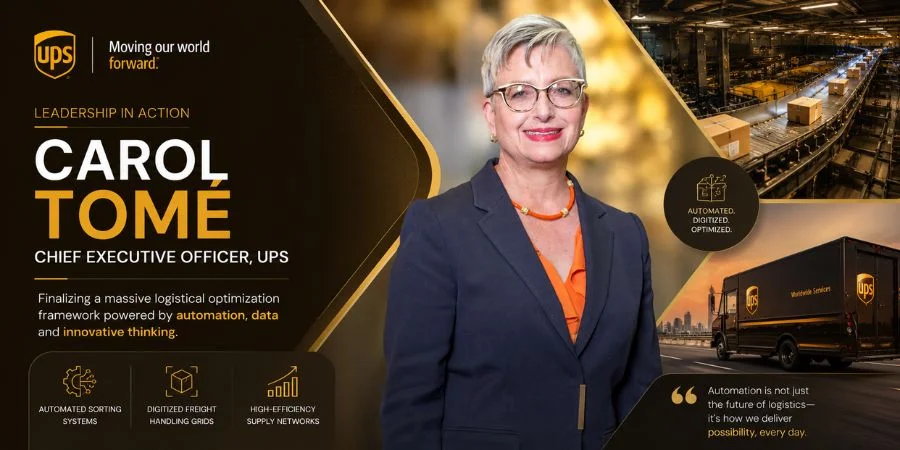
UPS Chief Executive Officer Carol Tomé has finalized a major logistics optimization initiative centered on automated sorting systems and digitized freight handling grids. The move is designed to enhance operational efficiency, improve delivery accuracy, and strengthen supply chain resilience across the company’s global network.
The announcement has drawn significant attention across the logistics and business sectors, positioning the Carol Tome UPS Automated Supply Framework as a notable example of how large-scale automation can transform modern supply chain operations. Industry observers view the framework as a strategic response to growing demand for faster, more reliable, and technology-driven logistics solutions.
UPS Accelerates Automation Across Its Network
The newly implemented framework focuses on integrating advanced automated sorting technologies with digital freight management systems. These upgrades are intended to streamline package movement, reduce manual intervention, and improve visibility throughout the transportation process.
By leveraging automation at key operational points, UPS aims to increase throughput while maintaining high service standards. The initiative reflects a broader industry trend toward digitization as logistics providers seek greater efficiency in increasingly complex supply chains.
Why the Carol Tome UPS Automated Supply Framework Is Trending
The Carol Tome UPS Automated Supply Framework has become a trending topic because of its emphasis on scalable, technology-driven logistics infrastructure. As businesses face rising customer expectations and evolving market demands, automation has emerged as a critical competitive advantage.
Tomé’s approach highlights how operational innovation can drive long-term growth while improving organizational resilience. The framework demonstrates how strategic investments in technology can support both efficiency and adaptability in a rapidly changing business environment.
Inspiration for Female Entrepreneurs and Business Leaders
Beyond its operational impact, the initiative has gained recognition among entrepreneurs and startup founders. Many industry experts see the framework as a valuable blueprint for building highly resilient and automated supply networks capable of supporting future growth.
Female founders, in particular, have pointed to Tomé‘s leadership as an example of how innovation, strategic planning, and technology adoption can help organizations scale effectively. Her focus on modernization underscores the growing influence of women leaders in shaping the future of global business operations.
The Growing Role of Automation in Supply Chain Strategy
Automation continues to play an increasingly important role in logistics and supply chain management. Companies worldwide are investing in digital systems, predictive analytics, and automated infrastructure to improve performance and reduce operational bottlenecks.
The success of initiatives such as the Carol Tome UPS Automated Supply Framework reinforces the importance of technology-driven transformation in maintaining competitiveness within the logistics sector.
As UPS continues to expand and refine its automated logistics capabilities, industry stakeholders will be closely watching how the framework influences future supply chain strategies and sets new standards for operational excellence across the global transportation industry.
Also Read: Dr Pamela Swett URI Dean Arts Sciences Appointment Sparks Industry Buzz