

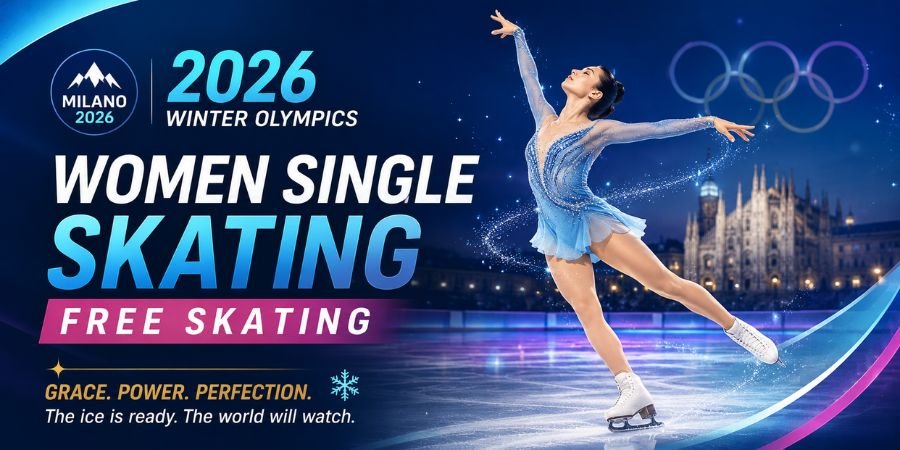
Figure skating has always carried a strange kind of magic. One moment the arena feels silent enough to hear a blade carve into the ice, and seconds later thousands of people are holding their breath as a skater launches into a triple Axel under Olympic pressure. That emotional intensity is exactly why the 2026 winter olympics women single skating free skating event is already generating enormous anticipation months before the Games begin. Fans are not only expecting technical brilliance in Milan-Cortina, but also unforgettable performances capable of defining careers, reshaping rivalries, and creating the next generation of Olympic legends. In women’s singles, the free skating segment often becomes the emotional centerpiece of the Winter Olympics because medals are rarely secured until the final program ends. One clean performance can change history, while a single mistake can haunt even the most decorated athletes for years.
The Importance of the Women’s Free Skating Event
Among all Olympic figure skating disciplines, women’s singles free skating consistently attracts global attention because it combines athletic danger with emotional storytelling. Unlike shorter routines that emphasize precision under strict technical limits, free skating allows athletes to reveal their full identity on the ice.
This is where Olympic champions are remembered forever. The long program demands endurance, control, interpretation, choreography, musical timing, and nerves strong enough to survive intense scrutiny from judges and millions of viewers worldwide.
At the 2026 Winter Olympics, the free skate is expected to be even more competitive because the current generation of skaters has pushed technical standards to extraordinary levels. Triple-triple combinations, difficult spins, edge transitions, and high-performance skating skills are no longer enough by themselves. Athletes now need complete programs that merge elite technical execution with authentic emotional performance.
That balance is what makes women’s free skating so compelling. Spectators are not just watching jumps. They are watching athletes attempt perfection while carrying years of training, sacrifice, injuries, expectations, and national pressure into a single performance.
Why the 2026 Olympics Feel Different
The Milan-Cortina Games arrive during an especially fascinating era for women’s figure skating. The sport is experiencing a transition between generations, coaching philosophies, and judging expectations.
Over the past decade, women’s singles became heavily dominated by technical difficulty. Younger skaters began landing increasingly advanced jump layouts earlier in their careers, dramatically changing scoring potential. However, recent seasons have also shown renewed appreciation for artistry, maturity, skating quality, and complete program construction.
That shift could make the 2026 Winter Olympics one of the most balanced women’s competitions in years.
Several factors are contributing to this feeling:
- Greater emphasis on component scores
- Increasing value placed on choreography and interpretation
- More experienced skaters remaining competitive longer
- Technical depth across multiple countries
- Intensifying rivalry between rising stars and established champions
Instead of one overwhelming favorite dominating the field, the Olympic race appears more open and unpredictable. That uncertainty adds enormous excitement for fans.
Understanding the Free Skating Format
For casual viewers, the scoring system in Olympic figure skating can feel complicated at first. Yet understanding the basics makes the free skating event much more enjoyable to watch.
The women’s singles competition is divided into two segments:
Short Program
This portion includes required technical elements and shorter performance time. Skaters establish initial rankings here.
Free Skating
The free skate is longer, more demanding, and usually decisive in determining medal positions. Athletes have more flexibility in choreography, jump layout, and emotional presentation.
The combined scores from both segments determine final standings.
In free skating, competitors earn points through:
- Jumps
- Spins
- Step sequences
- Choreographic sequences
- Skating skills
- Transitions
- Performance quality
- Musical interpretation
- Composition
Judges evaluate both technical execution and artistic presentation. A skater with flawless jumps but weak performance quality may lose to someone delivering a more complete overall program.
That combination of sport and artistry remains one of figure skating’s defining characteristics.
The Technical Revolution in Women’s Figure Skating
The technical ceiling in women’s skating has risen dramatically over recent Olympic cycles. Elements once considered nearly impossible are now central to medal contention.
Triple Axels became major game-changers. Quadruple jumps also entered the women’s discipline, transforming expectations for elite competitors.
At the 2026 Winter Olympics, several skaters are expected to attempt:
- Triple Axel combinations
- Quad toe loops
- Quad Salchows
- Difficult second-half jump layouts
- High-risk combination sequences
The challenge is not simply landing these jumps individually. Olympic free skating requires athletes to execute them after several exhausting minutes of intense movement and under overwhelming psychological pressure.
Fatigue becomes a major factor late in programs. Legs weaken, timing shifts slightly, and even tiny mistakes can affect jump rotation.
That is why complete consistency remains so rare in Olympic competition.
Artistry Is Becoming More Valuable Again
One of the most interesting developments heading into 2026 is the renewed appreciation for artistic performance.
Fans and analysts increasingly want programs that feel memorable emotionally rather than technically overloaded. Judges have also shown signs of rewarding skaters who create stronger connections between movement and music.
This trend could significantly influence medal outcomes.
Programs with sophisticated choreography, mature interpretation, and polished skating quality often leave stronger impressions during high-pressure Olympic finals.
Certain musical styles are also becoming more common:
- Cinematic orchestral pieces
- Contemporary emotional ballads
- Classical compositions with dramatic crescendos
- Modern experimental arrangements
- Story-driven theatrical programs
The best free skates create emotional tension from beginning to end. Viewers remember not just the jumps, but the atmosphere of the performance itself.
Olympic Pressure Changes Everything
Many athletes dominate regular international events but struggle under Olympic conditions. The difference in pressure is enormous.
Olympic free skating carries unique psychological weight because athletes understand how quickly reputations can change. Years of preparation are compressed into a few minutes on the ice.
Even experienced champions are vulnerable.
Several factors intensify Olympic pressure:
Global Attention
The Winter Olympics draw viewers who may not normally follow figure skating. Suddenly athletes perform in front of massive worldwide audiences.
National Expectations
In countries with strong skating traditions, Olympic medal hopes become major public stories. Athletes often feel responsible for national pride.
Finality
For some competitors, the Olympics represent the culmination of an entire career. There may never be another opportunity.
Momentum Swings
One mistake early in the program can mentally affect the rest of a performance. Skaters must recover instantly while continuing difficult technical elements.
That emotional unpredictability is why Olympic free skating remains so dramatic year after year.
The Arena Atmosphere in Milan-Cortina
The 2026 Winter Olympics will bring figure skating to Italy, adding a unique atmosphere to the event.
Italian audiences are known for emotional engagement and appreciation of artistic sports. That energy could create unforgettable conditions for the women’s free skate.
Unlike some colder competitive environments, Italian sporting crowds often respond passionately to performance quality, elegance, and dramatic moments. Figure skating thrives in that kind of setting.
The visual presentation of Milan-Cortina is also expected to elevate the experience. Olympic production standards continue improving, meaning viewers worldwide will likely see cinematic camera work, immersive arena lighting, and highly polished event staging.
For athletes, that environment can either inspire brilliance or increase pressure even further.
The Role of Music in Free Skating
Music selection is one of the most underrated strategic decisions in Olympic figure skating.
The right program music can amplify emotional impact, strengthen choreography, and help audiences remember a performance long after competition ends.
Poorly chosen music, however, can flatten even technically impressive routines.
Elite skaters spend months refining musical interpretation. Every transition, arm movement, step sequence, and emotional expression must feel synchronized with the soundtrack.
Certain qualities often define successful Olympic free skate music:
- Strong emotional progression
- Clear climactic moments
- Dynamic tempo variation
- Memorable melodic structure
- Distinctive identity
Some skaters choose powerful orchestral music to create dramatic intensity, while others succeed with intimate minimalist arrangements that highlight elegance and subtle movement quality.
The best Olympic programs feel inseparable from their music.
What Judges Watch Closely During Free Skating
Viewers often focus almost entirely on jumps, but judges evaluate far more than technical difficulty.
Modern figure skating judging rewards complete skating ability.
Edge Quality
Deep, controlled edges create smoother and more sophisticated movement across the ice.
Speed and Flow
Skaters who maintain speed naturally without excessive effort appear more polished and confident.
Transitions
Complex movements connecting technical elements increase difficulty and artistic quality.
Spin Quality
Centered spins with strong positions and speed can earn valuable points.
Program Construction
Smart choreography maximizes scoring opportunities while preserving stamina for difficult jumps.
Performance Presence
Athletes who project confidence and emotional authenticity often score better in presentation categories.
These details separate merely good skaters from true Olympic contenders.
Physical Demands Few Fans Truly Understand
Free skating may look graceful, but physically it resembles a sprint combined with repeated explosive jumping under extreme fatigue.
Elite women’s singles skaters train for:
- Core stability
- Rotational explosiveness
- Balance control
- Flexibility
- Cardiovascular endurance
- Mental concentration
- Recovery management
Landing high-impact jumps repeatedly places enormous stress on hips, knees, ankles, and backs.
Olympic athletes frequently compete through pain, chronic injuries, and exhaustion that viewers never see publicly.
Preparation for a single Olympic free skate often involves:
- Years of technical repetition
- Specialized jump training
- Off-ice conditioning
- Ballet instruction
- Sports psychology
- Nutritional planning
- Recovery protocols
That hidden work makes successful Olympic performances even more impressive.
Coaching Strategies Could Shape the Podium
Coaching decisions often determine whether skaters peak at the right moment.
Leading into the 2026 Olympics, coaching philosophies vary dramatically between countries and training camps.
Some prioritize technical intensity and difficult jump content. Others emphasize longevity, artistry, and consistent execution.
The most successful Olympic preparation usually balances:
- Technical growth
- Injury prevention
- Mental stability
- Program refinement
- Competition scheduling
Overtraining before the Olympics can leave athletes physically depleted. Undertraining may reduce technical sharpness.
Finding the perfect competitive rhythm is incredibly difficult.
The Evolution of Costume Design
Costumes play a surprisingly important role in figure skating presentation.
Olympic-level costumes are carefully designed to support choreography, musical themes, and visual storytelling without restricting movement.
Modern costume trends include:
- Elegant minimalist designs
- Crystal detailing
- Asymmetrical cuts
- Thematic color palettes
- Lightweight stretch materials
Costumes must survive intense movement while maintaining visual elegance under arena lighting and high-definition broadcast cameras.
Some Olympic outfits become iconic parts of figure skating history because they perfectly match the emotional tone of unforgettable performances.
Potential Rivalries Defining the Event
Every memorable Olympics features rivalries that capture fan imagination. The women’s free skating competition in 2026 is expected to include several compelling storylines.
Possible dynamics include:
Veteran vs Rising Star
Experienced skaters with refined artistry may face younger athletes attempting more difficult technical layouts.
Technical Power vs Artistic Sophistication
Some competitors may rely on difficult jumps, while others focus on skating quality and interpretation.
Redemption Narratives
Athletes disappointed in previous championships often arrive highly motivated for Olympic redemption.
National Battles
Countries with multiple elite skaters sometimes create intense internal competition even before Olympic finals begin.
These narratives add emotional depth beyond raw scores.
Social Media Is Transforming Figure Skating Fame
The modern Olympic experience is very different from past eras because athletes now exist within nonstop digital attention.
Short clips of practices, costume reveals, interviews, and training sessions spread instantly online. A single viral performance can dramatically increase global popularity overnight.
For skaters, social media creates both opportunities and challenges.
Benefits
- Larger fan communities
- Increased sponsorship opportunities
- Greater personal branding
- Expanded international visibility
Challenges
- Constant criticism
- Unrealistic expectations
- Mental pressure
- Viral mistakes
Athletes competing in 2026 will likely face more digital scrutiny than any previous generation of Olympic figure skaters.
The Emotional Weight of Olympic Moments
Some Olympic performances become cultural memories because they capture human emotion so clearly.
Fans remember:
- Tears after perfect skates
- Shock after unexpected mistakes
- Celebrations in the kiss-and-cry area
- Standing ovations
- Emotional reactions from coaches and families
Women’s free skating produces especially powerful moments because athletes often express vulnerability through performance itself.
Unlike many sports focused purely on measurable outcomes, figure skating allows personality and emotion to become part of competition.
That emotional openness creates unusually strong audience connections.
Training Routines Before the Olympics
Elite skaters structure Olympic preparation with extraordinary precision.
A typical training schedule may include:
Morning Ice Sessions
Jump repetition, run-throughs, and technical correction.
Off-Ice Conditioning
Strength training, mobility work, plyometrics, and endurance exercises.
Choreography Practice
Refining transitions, expression, and musical timing.
Recovery Sessions
Massage therapy, stretching, physiotherapy, and recovery monitoring.
Mental Preparation
Visualization exercises and performance psychology sessions.
As the Olympics approach, many athletes reduce unnecessary public appearances to maintain focus and energy.
Injury Risks Remain a Major Concern
One of the harsh realities of women’s figure skating is how quickly injuries can change competitive landscapes.
Common issues include:
- Stress fractures
- Hip injuries
- Back pain
- Ankle instability
- Knee strain
Because Olympic qualification cycles are so demanding, some athletes push their bodies close to physical limits.
Injuries occurring shortly before the Games can dramatically affect medal predictions. Sometimes favorites arrive less than fully healthy but keep details private until after competition.
Fans often underestimate how much pain elite athletes manage behind the scenes.
How Olympic Judging Debates Influence Public Conversation
Figure skating has long sparked passionate debate over judging fairness and scoring interpretation.
Even with modern scoring systems, controversies still emerge around:
- Program component scores
- Rotation calls
- Under-rotation reviews
- Grade of execution
- Artistic interpretation
At major events, fans, analysts, and former skaters frequently disagree about results.
Interestingly, those debates often increase public engagement because viewers become emotionally invested in performances and scoring outcomes.
The 2026 women’s free skate will likely generate intense discussion online regardless of final standings.
Countries Expected to Influence the Competition
Women’s figure skating remains globally competitive, but several nations consistently produce elite contenders.
Strong Olympic influence is expected from:
- Japan
- South Korea
- United States
- Belgium
- Italy
- Canada
Each country brings distinct training styles, skating traditions, and performance philosophies.
Japanese skaters are often admired for technical precision and refined skating quality. South Korean athletes frequently combine elegance with consistency. American skaters are known for athletic versatility and strong performance projection.
European programs continue evolving rapidly as investment in elite skating development increases.
The Growing Popularity of Women’s Figure Skating
Women’s singles has become one of the Winter Olympics’ most marketable events because it appeals to both dedicated sports fans and casual viewers.
Several factors explain its popularity:
- Emotional storytelling
- High visual appeal
- Dramatic unpredictability
- Individual athlete narratives
- Global rivalries
- Viral performance moments
Streaming platforms and social media have also made figure skating highlights more accessible than ever before.
New fans can discover performances instantly, expanding the sport’s international reach.
Practical Tips for Watching the Free Skate Like an Expert
Fans who understand certain details often enjoy competitions more deeply.
Watch Entry Speed
Strong skaters maintain speed naturally into jumps without appearing tense.
Observe Transitions
Programs with difficult transitions are harder to execute cleanly.
Pay Attention to Recovery
Great competitors recover quickly after mistakes instead of mentally collapsing.
Listen to Crowd Reactions
Experienced audiences often recognize strong skating quality before scores appear.
Focus on Overall Flow
The best programs feel seamless rather than disconnected between technical elements.
These small observations reveal why certain performances score higher than others.
Memorable Olympic Free Skate Characteristics
Historically, the most celebrated Olympic programs tend to share similar qualities.
They usually combine:
- Technical difficulty
- Emotional authenticity
- Strong choreography
- Clear musical identity
- Competitive composure
- Visual elegance
Perfect technical execution alone rarely guarantees legendary status. Fans remember programs that create emotional resonance.
That is why some silver-medal performances remain more culturally iconic than certain gold-medal victories.
Future Trends Emerging in Women’s Figure Skating
The 2026 Olympics may preview several future directions for the sport.
Increased Athleticism
Technical expectations will likely continue rising.
More Sophisticated Choreography
Audiences increasingly value originality and artistic depth.
Advanced Sports Science
Recovery and injury prevention methods are becoming more important.
Stronger Mental Coaching
Psychological resilience now plays a larger role in elite preparation.
Longer Career Longevity
Improved training management may allow more athletes to remain competitive into adulthood.
These trends could reshape women’s singles over the next decade.
Why Fans Around the World Are Already Excited
Olympic figure skating delivers something rare in modern sports: unpredictability combined with artistic emotion.
No simulation, ranking, or prediction model can fully anticipate what will happen during Olympic free skating. A favorite can stumble. An underdog can produce a career-defining performance. A clean skate at the perfect moment can transform an athlete into an international icon within minutes.
That uncertainty is deeply compelling.
The 2026 Winter Olympics women’s singles free skate promises:
- Elite technical competition
- Emotional performances
- Major rivalries
- Unforgettable Olympic moments
- Potential scoring breakthroughs
- New global stars
For longtime figure skating followers, it represents the continuation of a constantly evolving sport. For casual viewers, it offers one of the most dramatic and emotionally engaging events of the Winter Games.
FAQs
What is the 2026 winter olympics women single skating free skating event?
It is the long-program segment of the women’s singles figure skating competition at the 2026 Winter Olympics, where athletes perform technically and artistically demanding routines.
When will the women’s free skating competition take place?
The official Olympic schedule will confirm exact dates, but the women’s singles free skate is expected during the main figure skating program in Milan-Cortina 2026.
Why is free skating more important than the short program?
Free skating carries greater scoring weight and often determines final medal standings because athletes perform longer and more complex routines.
What jumps are expected in the 2026 women’s competition?
Fans may see triple Axels, quad attempts, advanced combinations, and difficult second-half jump layouts from top contenders.
Can a skater win gold after trailing in the short program?
Yes. Strong free skating performances can completely change standings, especially if leading skaters make mistakes under pressure.
Also Read: Nayel Nassar Net Worth 2026: The Truth About His Wealth, Family & Luxury Life