

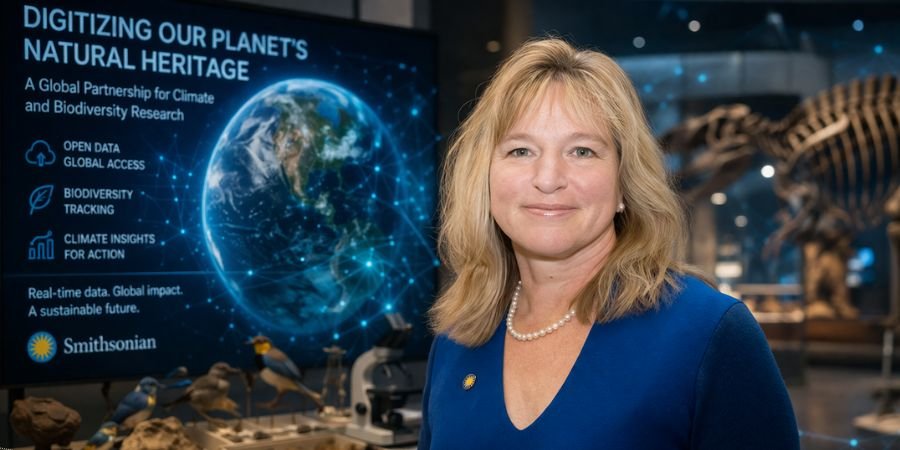
Ellen Stofan Announces Global Digitization Initiative
Ellen Stofan, Under Secretary for Science and Research at the Smithsonian Institution, announced a groundbreaking global partnership to digitize natural history collections. The initiative aims to make vast biological and environmental data accessible to researchers worldwide, supporting advanced climate change studies.
This large-scale collaboration will bring together museums, universities, and research institutions to convert millions of physical specimens into digital records. By doing so, scientists will gain real-time access to critical biodiversity data, significantly enhancing their ability to track environmental changes.
Why the Initiative Is Trending
The announcement by Ellen Stofan is gaining global attention not only due to its scientific significance but also because of her leadership as a prominent female figure in science. The initiative represents a major step toward democratizing access to scientific data, making it freely available to researchers, policymakers, and conservationists.
In an era where climate change impacts are accelerating, the need for accurate and accessible biodiversity data has become more urgent than ever. This partnership addresses that need by providing open-source datasets that can be used to monitor species distribution, habitat loss, and ecological shifts in real time.
Advancing Climate Change Research Through Data
The digitization of natural history collections will allow researchers to analyze patterns across time and geography. These collections, which include plant, animal, and fossil specimens, hold decades—sometimes centuries—of valuable environmental information.
By integrating this data into digital platforms, scientists can use advanced technologies such as AI and machine learning to predict future climate scenarios. This will help governments and organizations make more informed decisions regarding conservation and sustainability strategies.
Global Collaboration and Scientific Impact
The success of this initiative depends on international collaboration. Institutions from multiple countries are expected to participate, creating one of the largest open-access scientific databases in history. This collaborative approach ensures that knowledge is shared across borders, accelerating global climate research efforts.
Furthermore, the initiative is expected to inspire similar projects in other scientific fields, reinforcing the importance of open data in solving complex global challenges.
What Comes Next
As the partnership begins its implementation phase, the focus will shift toward scaling digitization efforts and ensuring data accuracy and accessibility. With continued support from global institutions, Ellen Stofan’s initiative could redefine how scientists study climate change—potentially leading to faster, more effective solutions for protecting the planet.