

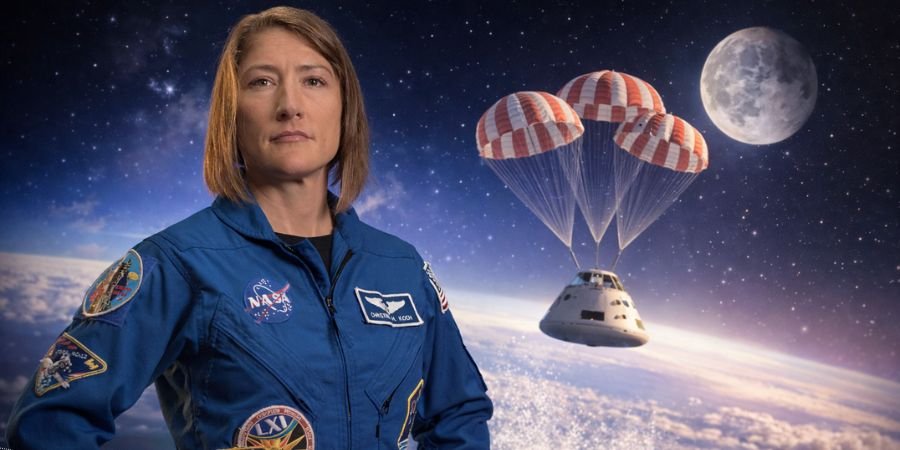
Christina Koch Returns After Historic Moon Orbit Mission
Christina Koch is returning to Earth today after completing a groundbreaking 10-day mission in space, marking a historic milestone in human spaceflight. Her capsule, Orion, is scheduled to splash down in the Pacific Ocean at approximately 5:07 PM PDT.
The mission has drawn global attention as Christina Koch officially becomes the first woman to orbit the Moon, a significant achievement in the ongoing push for gender equality in space exploration.
Historic Return Marks Milestone for Women in Space
Christina Koch’s successful journey around the Moon represents a defining moment in aerospace history. While several astronauts have previously traveled beyond low Earth orbit, no woman had completed a lunar orbit mission until now.
Her return signals not just the end of a successful mission, but also a symbolic breakthrough for women in STEM fields. The accomplishment is being celebrated worldwide as a step forward in diversifying space exploration.
Inside the 10-Day Orion Mission
The mission, conducted aboard NASA’s Orion spacecraft, lasted 10 days and focused on testing deep-space capabilities for future lunar and Mars missions. Orion, designed for long-duration space travel, orbited the Moon before beginning its return trajectory to Earth.
Throughout the mission, Christina Koch contributed to key research and system evaluations, helping scientists gather critical data that will support upcoming crewed missions under NASA’s long-term exploration programs.
Why Christina Koch Is Trending Worldwide
Christina Koch is trending globally not only because of her safe return but also due to the historic nature of her achievement. As the first woman to orbit the Moon, her mission has sparked conversations about representation and inclusion in space science.
Her journey builds upon her previous record-setting spaceflight experience, further solidifying her role as one of NASA’s most accomplished astronauts.
What Comes Next for Space Exploration
With Christina Koch’s successful return, NASA is expected to accelerate preparations for future lunar missions, including potential crewed landings and extended stays on the Moon.
This milestone could pave the way for more diverse astronaut crews and inspire the next generation of explorers. As space agencies continue to push boundaries, the legacy of this mission will likely shape the future of human space exploration for years to come.