





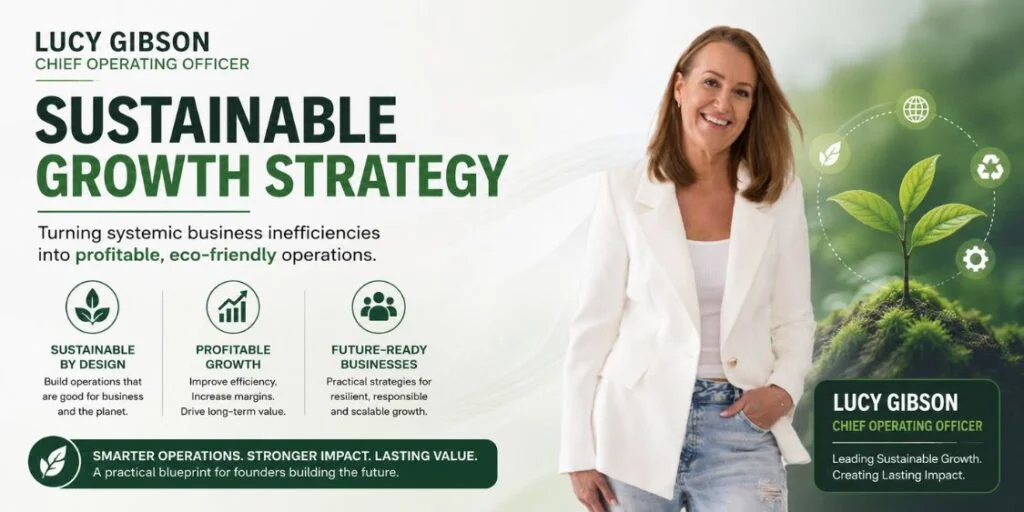
Lucy Gibson Unveils 2026 Sustainable Growth Strategy
Lucy Gibson has introduced her 2026 vision for transforming operational inefficiencies into profitable and environmentally responsible business models through what she calls the “Sustainable Growth” strategy.
The announcement is gaining attention across the business community as companies continue to navigate economic uncertainty, rising operational costs, and growing pressure to meet sustainability goals. Gibson’s framework focuses on reducing waste, streamlining internal systems, and improving long-term profitability without sacrificing environmental responsibility.
Industry observers say the strategy offers a practical roadmap for startups and established companies looking to balance financial performance with sustainable operations.
Why Lucy Gibson Sustainable Growth Strategy Is Trending
The Lucy Gibson Sustainable Growth Strategy is trending because it directly addresses challenges many founders are facing in 2026, including inflation, supply chain instability, and increasing investor demand for sustainable business practices.
Business leaders, especially female founders and emerging entrepreneurs, are paying close attention to Gibson’s approach because it emphasizes realistic operational improvements rather than expensive large-scale transformations.
Her strategy highlights how businesses can identify hidden inefficiencies in areas such as resource management, logistics, energy use, and workflow automation to create measurable cost savings while reducing environmental impact.
Experts say this combination of profitability and sustainability is becoming increasingly important as consumers and investors prioritize responsible business operations.
A Blueprint for Eco-Friendly and Profitable Operations
According to Gibson’s framework, sustainable growth should not be treated as a separate environmental initiative but as a core business strategy integrated into everyday operations.
The model encourages companies to adopt data-driven decision-making, optimize supply chains, reduce unnecessary operational expenses, and invest in scalable systems that support long-term expansion.
Supporters of the Lucy Gibson Sustainable Growth Strategy argue that businesses adopting these methods could improve resilience during uncertain economic conditions while strengthening brand trust among environmentally conscious consumers.
The approach also aligns with the broader global movement toward corporate accountability and greener operational standards.
Female Founders Driving the Sustainability Conversation
One reason the strategy is resonating widely is its relevance to female entrepreneurs building businesses in highly competitive markets. Many founders are seeking ways to maintain growth while managing tighter budgets and evolving customer expectations.
Gibson’s emphasis on operational discipline and sustainable profitability has positioned her strategy as a timely business framework rather than a temporary trend.
Analysts believe the discussion around sustainable operational models will continue to expand throughout 2026 as companies search for cost-effective ways to remain competitive.
What Could Happen Next
As more organizations explore efficiency-focused sustainability strategies, Lucy Gibson’s ideas could influence broader conversations around modern business leadership and operational transformation. Industry experts expect more companies to adopt similar sustainable growth models in the coming months as economic and environmental pressures continue to shape corporate decision-making.
Also Read: Tory Burch Foundation Seed Funding Powers $50M Women Startup Push